
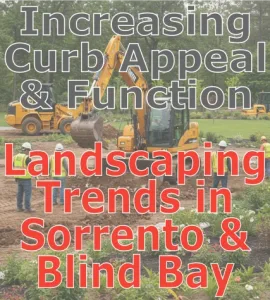
 Nestled against the shimmering waters of Shuswap Lake, the communities of Sorrento and Blind Bay offer some of British Columbia’s most desirable real estate. The allure of the region is undeniable, characterized by sweeping lake views, lush evergreen forests, and a relaxed, recreational lifestyle. However, the very topography that provides these stunning vistas – steep hillsides and proximity to the water – presents unique challenges for homeowners. In this region, landscaping is rarely just about planting flowers; it is a critical discipline that merges structural engineering with aesthetic design. Successful projects involving Sorrento and Blind Bay landscaping require a nuanced approach balancing visual beauty with functional land management to protect property investments and maximize usable outdoor space.
The Shuswap Challenge: Beauty versus Gravity
The fundamental challenge for many properties in Sorrento and Blind Bay is gravity. Homes are often situated on significant grades to capitalize on the views. While breathtaking from a living room window, a steep slope outdoors often translates to unusable land, difficult maintenance, and, crucially, water runoff issues.
When rain falls or snow melts on a steep grade, moving water gains velocity, stripping away topsoil and destabilizing the ground. Over time, this erosion can threaten building foundations, wash out driveways, and pollute the lake with sediment. Therefore, professional landscaping in this area is not merely decorative; it is preventative medicine for the property. The current trends in the region reflect a shift toward sustainable, engineered solutions that look natural while performing heavy-duty structural work.
Sorrento Landscaping: The Art of Low-Maintenance Living
In Sorrento, where many residents spend their summers boating or their winters traveling, the trend is heavily leaning toward low-maintenance luxury. Homeowners want to spend their weekends enjoying their patios, not weeding them. This has led to a surge in “xeriscaping” principles, adapted for the Shuswap climate.
Professional Sorrento landscaping embraces the use of native and drought-tolerant plants. Varieties that are indigenous to the interior BC region are naturally resistant to local pests and require significantly less irrigation once established. Plants with deep, fibrous root systems are particularly valued on lakeside properties as they help bind the soil together, providing natural erosion control.
Furthermore, the integration of extensive hardscaping is transforming Sorrento backyards. By replacing sprawling, water-thirsty lawns with elegant paver patios, flagstone walkways, and outdoor kitchens, landscapers are creating functional “outdoor living rooms.” These hardscapes not only reduce mowing time but also define spaces for entertaining. When designed correctly, these hard surfaces are graded to direct water away from the house and into designated drainage zones or rain gardens, solving moisture problems while enhancing livability.
Blind Bay Landscaping: Mastering the Slope with Retaining Walls
Blind Bay perhaps typifies the hillside challenge more than anywhere else in the region. Many homes here cling to steep inclines, where stepping out the back door might mean immediately facing a sharp drop or a towering uphill bank. The prevailing trend in Blind Bay landscaping is the creation of flat, usable yard space where none naturally existed.
The primary tool for this transformation is terracing through the construction of retaining walls. These are not mere garden edging; they are engineered structures designed to hold back tons of earth and water pressure.
Modern retaining walls in Blind Bay move beyond simple utility. While engineered concrete blocks offer immense structural integrity for tall walls, many homeowners are opting for natural stone boulders or stack-stone veneers that blend seamlessly with the rugged surrounding environment.
The functional aspect of these walls is paramount. A properly constructed retaining wall system includes extensive drainage aggregate and weeping tiles behind the structure to prevent hydrostatic pressure build-up – the leading cause of wall failure. By terracing a steep slope into two or three level “benches,” homeowners gain valuable real estate for gardens, play areas, or fire pits, effectively increasing the square footage of their usable property while stabilizing the hillside against slides.
The First Impression: Sorrento Road Building and Elegant Entryways
Curb appeal begins at the street, and in the Shuswap, functionality at the entryway is essential. This is a region defined by recreational vehicles; boats, RVs, snowmobile trailers, and large trucks are commonplace. A standard suburban driveway is often insufficient.
Sorrento Road Building techniques are being adapted for residential use to create entryways that are both grand and durable. The trend is away from basic asphalt pads and toward engineered driveways capable of handling heavy loads without cracking or rutting.
For some, this means reinforced concrete with exposed aggregate finishes that offer grip and an upscale aesthetic. For others, particularly on larger, more rustic properties, the trend is toward “elegant gravel.” This involves proper road-base preparation—excavating soft topsoil and installing geotextile fabric followed by compacted layers of crush—topped with decorative, angular gravel that locks together. These driveways look appropriate in a semi-rural setting but offer the structural integrity required to park a 30-foot travel trailer or turn around a boat trailer without difficulty. Widening entrance aprons and incorporating strategic turnaround spots are key elements of modern Sorrento driveway design.
The Cohesive Vision: Construction Meets Landscaping
Perhaps the most significant trend in boosting property value is the move toward holistic project management. In the past, a house might be built by one contractor, the driveway put in by another, and the garden planted by a third, resulting in a disjointed appearance.
Today, the most successful projects see professional Sorrento construction teams working alongside landscape architects from day one. This collaboration ensures a cohesive look from the house to the street. It means that the stone veneer used on the house foundation is echoed in the retaining walls in the garden. It means the grade established by the home builder is seamlessly picked up by the landscaper to ensure perfect drainage.
When the built environment (the house and driveway) and the natural environment (the gardens and slopes) are treated as a single, integrated design challenge, the result is a property that feels settled, secure, and immensely valuable. In the high-stakes real estate market of Sorrento and Blind Bay, this professional, integrated approach is the ultimate driver of both curb appeal and long-term function.
Frequently Asked Questions
Due to the steep topography surrounding Shuswap Lake, water runoff from rain and snowmelt moves quickly. Without proper management, this runoff strips topsoil, destabilizes slopes, and can threaten home foundations. Professional landscaping uses retaining walls, terracing, and specific plantings to slow water down and hold the soil in place.
Native plants are adapted to the local climate and soil conditions of the Shuswap. Once established, they typically require far less water and maintenance than non-native species. Furthermore, many native plants have deep root systems that are excellent for stabilizing soil on lakeside or hillside properties.
Generally, yes. Retaining walls over a certain height (often around 1.2 meters or 4 feet, though local bylaws vary) usually require a building permit and must be designed by a qualified engineer to ensure they can withstand the soil and water pressure. Always check with the Columbia Shuswap Regional District (CSRD) before starting construction.
While asphalt is common, heavy static loads like parked RVs can cause it to divot over time. Reinforced concrete (often with rebar) offers superior load-bearing capacity. Alternatively, a properly engineered gravel driveway built with commercial “road building” techniques (deep compacted base and geotextile fabric) is a very durable and cost-effective option for heavy equipment.
While DIY gardening is fine for flat ground, the slopes of Sorrento and Blind Bay present structural challenges. Incorrectly building a retaining wall or improperly grading a driveway can lead to expensive failures, water damage to your home, or land slippage. Professionals have the equipment, engineering knowledge, and understanding of local drainage patterns necessary to ensure the work is safe, durable, and compliant with regulations.