
Embarking on a construction or landscaping project in the Shuswap and North Okanagan regions requires careful planning, proper equipment selection, and adherence to local regulations. Property owners in Sicamous, Salmon Arm, Sorrento, and Blind Bay often face unique geographical challenges, from the steep slopes of the Monashee foothills to the varied soil conditions near Shuswap Lake.
Securing the services of a qualified, experienced professional ensures that your site preparation, trenching, or land clearing is executed safely, legally, and efficiently. This comprehensive guide addresses the most critical questions property owners encounter when hiring an excavating contractor in these specific British Columbia communities.
Frequently Asked Questions
What is the difference between a Bobcat and an Excavator?
A Bobcat is a versatile, wheeled or tracked compact loader used primarily for pushing, lifting, and moving materials across a site. It can be equipped with various attachments such as buckets, augers, or sweepers, making it ideal for grading and final landscaping.
An excavator features a rotating 360 degree cab, an articulating boom, and a bucket attachment designed primarily for deep digging, trenching, and heavy demolition. While a Bobcat maneuvers well in tight residential backyards for surface work, an excavator provides the depth and power necessary for foundational digging and heavy lifting.
How do I prepare my property for heavy construction equipment?
Proper site preparation minimizes project delays, reduces the risk of property damage, and ensures the safety of the construction crew. Property owners should execute the following steps before any machinery arrives on site:
- Clear Overhead Obstructions: Trim low-hanging branches and clear overhead wires along the access route to allow tall machinery to pass safely.
- Mark Underground Utilities: Identify and mark the precise locations of water lines, gas pipes, electrical conduits, and sewer connections.
- Secure the Periphery: Move vehicles, patio furniture, firewood piles, and portable structures away from the designated work zone and access path.
- Notify the Neighbors: Inform adjacent property owners about the upcoming project, as heavy machinery can generate vibration and noise.
Does Amigo Trucking & Excavating handle both residential and commercial projects?
Yes, with 50 years of experience in the Shuswap and North Okanagan, the team manages everything from small residential landscaping to large-scale commercial construction. The company possesses the diverse fleet and technical expertise required to navigate both the confined spaces of residential developments and the complex engineering specifications of commercial commercial sites.
What permits and regulations apply to excavation in the Shuswap region?
Excavation projects within Salmon Arm, Sicamous, Sorrento, and Blind Bay must comply with specific municipal bylaws and regional district regulations. The exact requirements depend on the scope of the project and the specific location of the property.
- Columbia Shuswap Regional District (CSRD) Bylaws: For properties in Sorrento and Blind Bay (Electoral Area C), development permits may be required if the excavation occurs within a Riparian Areas Regulation (RAR) zone, which protects land near fish-bearing streams and shoreline environments.
- Municipal Environmental Permits: Within the District of Sicamous and the City of Salmon Arm, specific soil removal and deposition bylaws dictate how much earth can be moved before a formal permit is mandatory.
- Geotechnical Assessments: If your property is situated on a steep slope or within a known landslide hazard zone, local authorities will require a professional geotechnical engineer to assess the site stability before excavation begins.
How do soil and terrain variations in these specific areas impact excavation costs?
The geological composition of the Shuswap and North Okanagan regions varies significantly from one community to the next. These distinct soil profiles directly influence the timeline, equipment requirements, and overall cost of an excavation project.
- Salmon Arm and Flat Valley Areas: These areas often feature fine silt, clay, or alluvial soils. Clay retains water, which can create unstable, muddy conditions during the spring melt or heavy rainfall, necessitating specialized tracked equipment to avoid getting stuck.
- Sorrento and Blind Bay Slopes: Properties located on the hillsides overlooking Shuswap Lake often encounter shallow bedrock and large glacial erratics (large boulders left by glaciers). Excavating this terrain requires heavy-duty excavators equipped with hydraulic breakers or rock hammers, which increases operating costs.
- Sicamous and Waterfront Zones: High water tables near the lake or rivers require dewatering strategies, such as utilizing trash pumps, to keep trenches dry during foundation digging or utility installation.
Essential Steps for Navigating the Hiring Process
When selecting an excavating contractor for your construction project, following a structured evaluation process minimizes risk and ensures high-quality results.
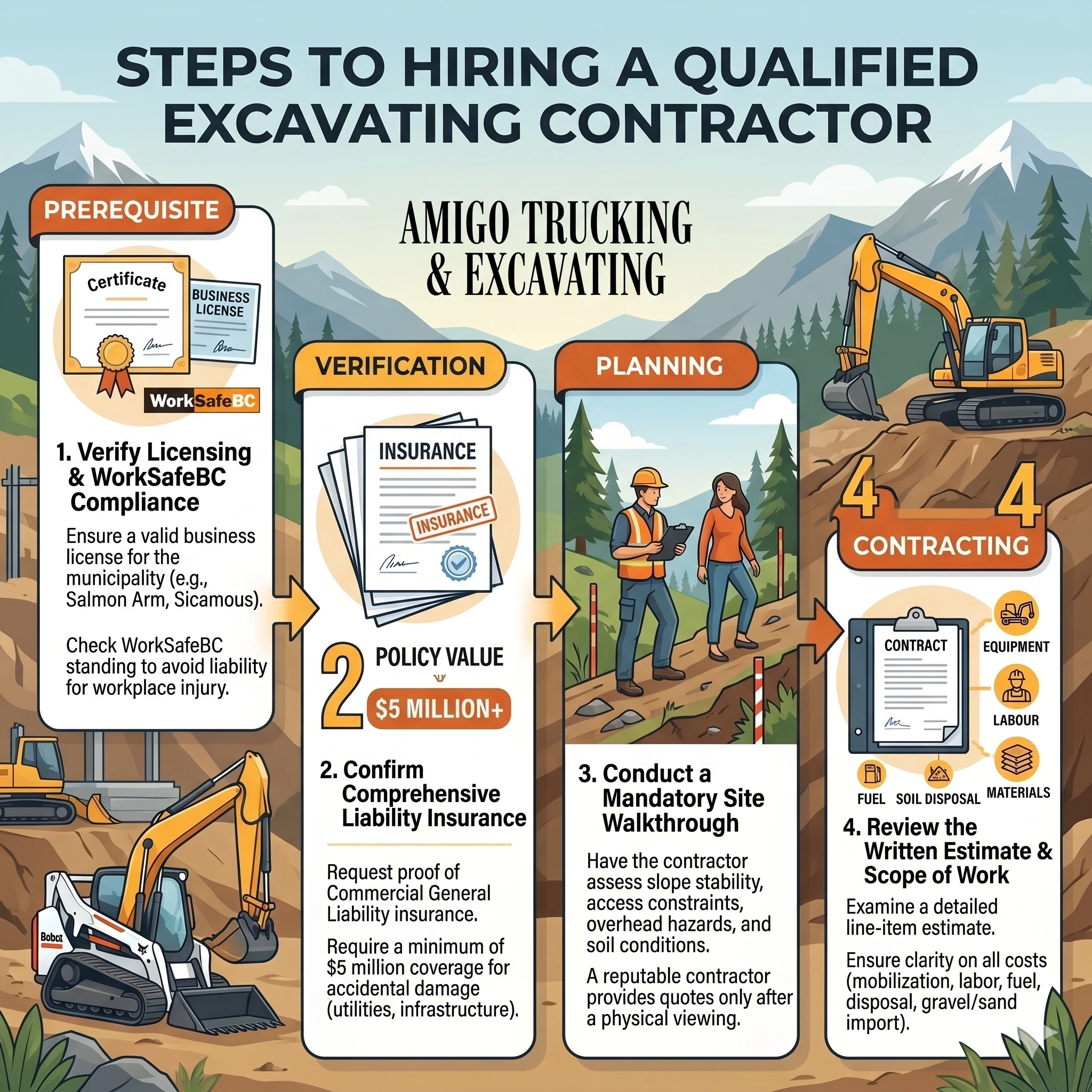
Equipment Selection Guide for Local Property Owners
Choosing the correct machinery is critical for project efficiency. The table below outlines common excavation tasks and the specific equipment configurations required to complete them.
| Project Type | Primary Machinery | Key Considerations for Local Terrain |
|---|---|---|
| Foundation Digging & Basements | Full-sized tracked excavator | Requires precise depth control and stable ground conditions; necessary for navigating bedrock on hillside properties. |
| Trenching for Utilities (Water, Sewer) | Mini-excavator with rubber tracks | Ideal for navigating tight residential side yards in Blind Bay or Sorrento without destroying existing asphalt or concrete driveways. |
| Land Clearing & Stump Removal | Heavy excavator with a thumb attachment | Essential for pulling large tree stumps and clearing dense brush on raw acreage plots. |
| Driveway Grading & Gravel Spreading | Compact track loader (Bobcat) | Provides high traction on loose gravel and slopes while minimizing soil compaction. |
| Retaining Wall Site Preparation | Combo of mini-excavator and Bobcat | The excavator cuts the bench into the hillside, while the compact loader moves the heavy locking blocks or rock material into place. |
Critical Safety Reminder: Under British Columbia regulation, property owners or their contractors must contact BC 1 Call at least three business days before commencing any digging. This service coordinates with utility operators to locate and mark underground gas, electric, and communication lines, preventing dangerous and costly utility strikes.